

Deciding to end a marriage is rarely easy. It carries an immense emotional weight, and the prospect of navigating the court system often adds to that underlying anxiety. However, when you and your spouse agree to part ways, the law provides a dignified, structured, and straightforward route. You do not have to endure years of draining, contested litigation. Understanding the mutual consent divorce process Bangalore residents must follow is the first step toward securing your future with clarity and peace of mind.
Key Takeaway: Under a mutual consent divorce in Bangalore, both spouses agree to part ways amicably under Section 13B of the Hindu Marriage Act or Section 28 of the Special Marriage Act. The process requires you to file a joint petition, attend mandatory mediation, and complete a cooling-off period before the court grants the final divorce decree.
Need Immediate Legal Counsel?

- Talk to Advocate Geethanjali Setty Today
- Call our office now: +91-9916957929
- Visit us: No 101, Ashwathnarayana Nilaya, Railway Parallel Rd, Hampi Nagar, RPC Layout, Vijaya Nagar II Stage, Bengaluru, Karnataka 560104
What Are the Legal Prerequisites for a Mutual Divorce?
Before initiating the formal steps for mutual divorce in India, you must ensure that your circumstances meet the statutory eligibility criteria. The mutual divorce procedure Karnataka family courts enforce requires strict adherence to three foundational prerequisites. Unlike highly conflict-driven proceedings that can drag on due to the operational differences between criminal law vs civil law frameworks, an amicable split relies entirely on mutual terms. To file a joint petition successfully, you must establish the following:
-
Mutual Agreement: Both spouses must independently and mutually agree that the marriage has irretrievably broken down and consent to a legal separation.
-
Mandatory Separation: The parties must live separately for a minimum continuous period of one year immediately before presenting the petition.
-
Complete Settlement: You must completely resolve and mutually agree on all ancillary matters, such as alimony (maintenance), child custody arrangements, and the division of joint assets and liabilities, prior to filing.
The “One-Year Separation” Rule Explained
Many people mistakenly believe that “living separately” requires spouses to reside in different cities or even different houses. However, Supreme Court precedents establish that physical distance does not solely determine separation. Courts can legally consider spouses as living separately even if they reside under the same roof, provided they do not live together as husband and wife. The courts focus on the absence of marital duties, physical cohabitation, and shared domestic life, rather than merely checking for separate residential addresses.
The Crucial Foundation: Drafting the Memorandum of Understanding (MOU)
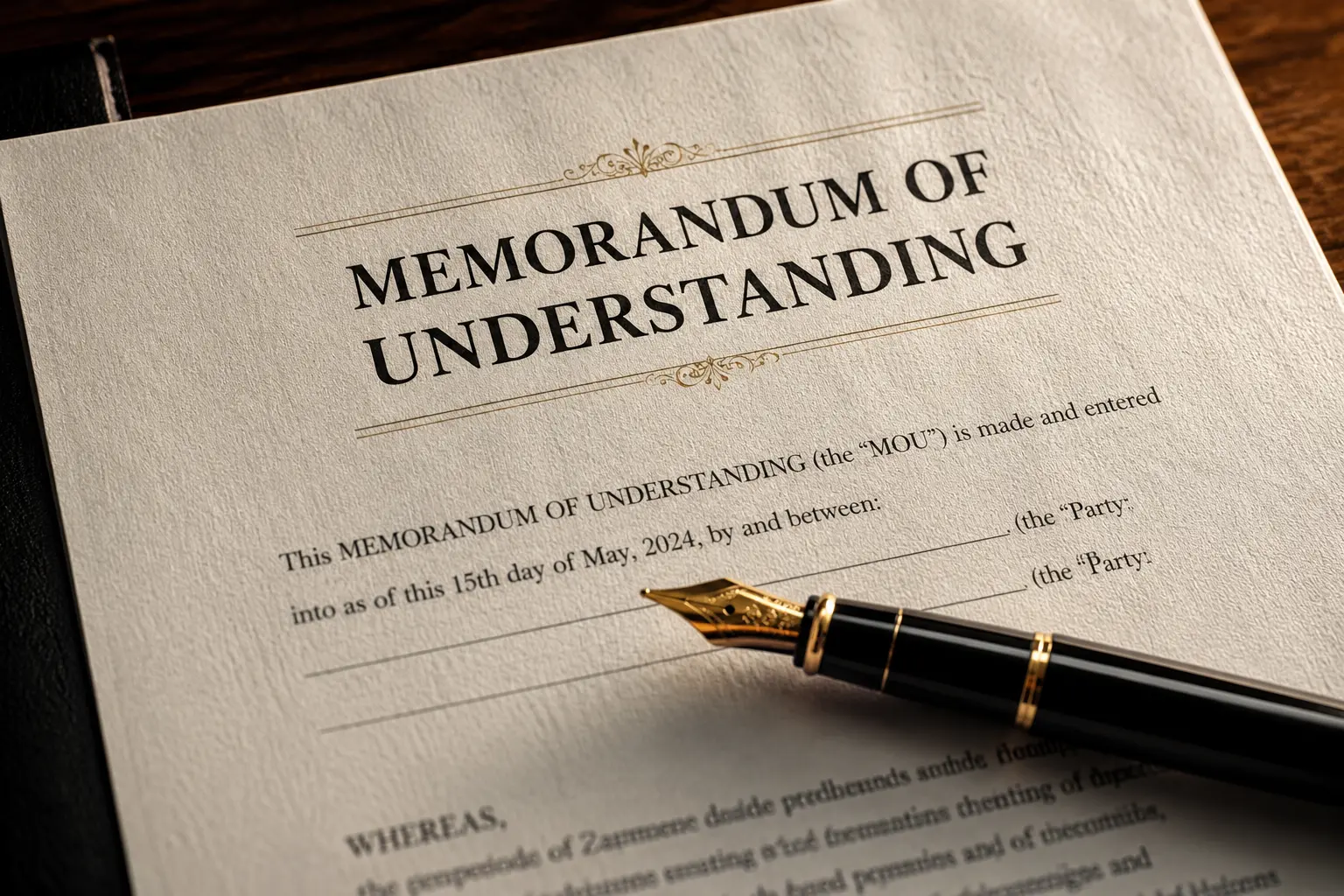
While the court procedure often feels like the most daunting part of a separation, it represents only the administrative phase. You lay the true legal groundwork before you ever step foot inside a courtroom when you draft the Memorandum of Understanding (MOU).
An MOU, or settlement agreement, is the legally binding contract that dictates the terms of your post-marital life. A vague, generic, or poorly drafted MOU is the number one reason mutual consent divorces devolve into bitter, contested legal battles years down the line. Ambiguity invites future litigation. Therefore, you must work with an experienced divorce lawyer in Bangalore families trust to ensure that you write airtight, enforceable clauses that leave no room for misinterpretation.
To protect both parties and ensure the court accepts your petition without delay, you must make your settlement agreement meticulously comprehensive. You must explicitly detail these critical components:
| Category | What You Must Clearly Define |
| Alimony & Maintenance | Define whether you will pay a one-time full-and-final lump sum or monthly installments. For monthly options, specify the exact amount, payment dates, and termination conditions. |
| Child Custody & Access | Working with a dedicated child custody lawyer in Bangalore ensures that provisions for primary physical custody, exact visitation schedules (weekends, holidays), and future educational expenses protect the child’s long-term interests. |
| Asset Division | Create a clear inventory and distribution plan for real estate, bank accounts, mutual funds, provident funds, jewelry (including stridhan), and vehicles. |
| Joint Liabilities | Explicitly assign responsibility for paying off ongoing financial obligations, including joint home loans, personal loans, or shared credit card debts. |
When you precision-draft these terms, you turn the court process into a smooth, predictable formality rather than an arena for renegotiation. A flawless settlement agreement protects your assets, your parental rights, and your future peace of mind.
The Step-by-Step Mutual Consent Divorce Process in Bangalore Courts
Once you finalize and sign your settlement agreement, you begin the formal legal proceedings. Navigating the mutual divorce process in Bangalore family court step by step requires a specific, chronological sequence of motions, physical court appearances, and mandatory counseling. For couples seeking a fast and uncontested divorce Bangalore courts generally enforce the following timeline:
Document Checklist: What to Bring to the Bangalore Family Court
To prevent administrative delays or sudden rejection by the court registry at Nyaya Degula, you must compile an accurate set of paperwork. When you gather the documents required for mutual divorce in family court Bangalore registry officials require specific evidence to verify your marriage, identity, and the terms of your separation.
Before your filing date, ensure you bring the originals and at least three sets of self-attested photocopies of the following documents:
-
Original Marriage Certificate: The Registrar of Marriages must issue this document (under the Hindu Marriage Act or Special Marriage Act).
-
Wedding Proofs: Bring a clear copy of the wedding invitation card and a few photographs establishing that the marriage ceremony took place.
-
Identity and Address Proofs: Bring valid, government-issued identification for both spouses, such as a Passport or Aadhaar card, to establish current residential jurisdiction.
-
Passport-Sized Photographs: Provide two to four recent, high-quality color photographs of each party.
-
Evidence of Separate Living: Present documented timelines (often formalized via individual affidavits) confirming a continuous separation of at least one year.
-
The Signed Memorandum of Understanding (MOU): Include the exhaustive, precision-drafted settlement agreement that forms the foundation of your uncontested petition.
Why Choose SP Law Chambers for Your Mutual Consent Divorce in Bangalore?
Navigating a legal separation requires more than just administrative filing; it requires strategic foresight and a deep understanding of local court mechanics. When you partner with an experienced family lawyer in Bangalore from our firm, you ensure that we handle your transition with dignity, speed, and absolute legal precision.
When you seek out our chambers, you secure more than just representation—you protect your post-divorce future. We protect our clients through several dedicated practices:
-
Precision-Drafted Settlement Agreements (MOU): We engineer your MOU to be foolproof, ensuring complex asset divisions, child custody arrangements, and alimony terms leave zero room for future litigation.
-
Accelerated Legal Timelines: We proactively seek legal remedies, such as filing specific applications to waive the 6-month cooling-off period, to expedite your uncontested divorce timeline whenever legally permissible.
-
Deep Local Court Expertise: From filing the initial joint petition at the Nyaya Degula Family Court to effectively navigating the mandatory Bangalore Mediation Centre, we manage the entire procedural roadmap to prevent administrative rejections.
-
Confidentiality & Empathy: We prioritize your peace of mind, minimizing your physical court appearances through strategic legal representation and handling your case with the utmost sensitivity.
Contact Us For Support
 Call Us: +91-9916957929 Available for urgent legal emergencies
 Email: splawchambersbangalore@gmail.com
 Visit Our Office: No 101, Ashwathnarayana Nilaya, Railway Parallel Rd, Hampi Nagar, RPC Layout, Vijaya Nagar II Stage, Bengaluru, Karnataka 560104
 Google Maps: Check Our Google My Business Listing for Reviews
Frequently Asked Questions About Mutual Divorce in Bangalore
To help you navigate the micro-nuances of an amicable separation, we provide direct, authoritative answers to the questions most frequently encountered in the Karnataka legal ecosystem:
Q1. Is it mandatory for both parties to be physically present in the Bangalore Family Court?
No, the court does not universally mandate physical presence for every single hearing. While judges prefer both spouses to attend the recording of statements, they provide options for video conferencing under specific conditions.
If one spouse lives abroad (NRI) or faces genuine incapacitation, their legal counsel can file an application to allow appearance via video conferencing. In such cases, you can execute a specialized Power of Attorney (POA) to manage the administrative filing at Nyaya Degula, ensuring your geographical location does not stall the legal process.
Q2. How long does the entire mutual divorce process take in Bangalore?
The entire process typically takes between 1 to 7 months, depending heavily on whether the judge waives the statutory 6-month cooling-off period.
If the Bangalore Family Court finds that you have permanently resolved all disputes and your separation length qualifies under Supreme Court guidelines, you can waive the 6-month waiting period via a separate application. If the judge grants the waiver, you can obtain the divorce decree in as little as a month. Without a waiver, you must observe the statutory 6-month pause between the First and Second Motions.
Q3. Can a mutual consent divorce petition be withdrawn after filing?
Yes, either spouse maintains the absolute legal right to unilaterally withdraw their consent at any point before the court passes the final judgment during the Second Motion.
A mutual divorce relies entirely on continuous, joint consent. If one spouse files an application to withdraw consent or simply refuses to state their willingness during the final hearing, the joint petition fails. In such scenarios, the remaining spouse must look to transform the case into a contested layout or file a separate petition.
Q4. Can we file for mutual divorce in Bangalore if our marriage was registered in another state?
Yes, you can file the petition in Bangalore even if your marriage took place or was registered outside Karnataka, provided you meet local residential jurisdiction criteria.
Under Indian family law, you can file a divorce petition within the jurisdiction where you solemnized the marriage, where you last resided together as a couple, or where the wife currently resides. If either of you currently lives and works in Bengaluru, the Bangalore Family Court holds the territorial jurisdiction to hear your case.
Q5. What happens if one spouse stops attending court hearings after filing the First Motion?
If a spouse fails to appear for the Second Motion or subsequent mediation sessions without a valid legal exemption, the judge will eventually dismiss the petition.
Because you must maintain and verify active mutual consent at both stages, the prolonged absence of one party signals a lack of ongoing cooperation. The court cannot grant a mutual decree if one party disappears. The attending spouse must then consider transforming the case into a contested layout based on grounds like desertion or cruelty.
Secure Your Future with a Flawless Settlement Agreement
While the procedural steps of a mutual consent divorce remain straightforward, the true legal work lies in your preparation. The family court merely validates the terms you present to them. An ambiguous or incomplete agreement can unravel years later, dragging you back into the courtroom over hidden assets, maintenance disputes, or child custody conflicts. You must work with a dedicated legal professional to prevent these hidden legal loopholes.
A mutual consent divorce should bring closure, not future liabilities. If you are navigating a separation and need an ironclad Memorandum of Understanding that protects your assets, custody rights, and peace of mind, you require expert legal guidance. Contact the family law team at SP Law Chambers in Bangalore for a confidential consultation to ensure you draft a legally sound settlement.

Advocate Geethanjali Setty is the driving force behind SP LAW CHAMBERS. With over 14 years of hands-on legal experience, she is known for her ethical, result-oriented approach. Geethanjali is registered with the Bar Council of Karnataka and has built a reputable practice offering comprehensive legal consultancy and advisory services. She and her team of six dedicated advocates handle a wide range of legal matters with integrity and efficiency.
At SP LAW CHAMBERS, clients receive not just legal expertise, but also a commitment to clear, client-focused guidance. Geethanjali’s focus on client satisfaction and her proven track record make her a trusted name in the Bangalore legal community.